Phuket's beaches
Updated
Phuket's main swimming beaches line its west coast from Mai Khao, by the airport, down to Nai Harn and Ya Nui: the sand is public land, free to walk onto outside the national park, and the surf runs strong from May to October.
- The busiest: Patong, a bay about 3 km long at the heart of the island's nightlife.
- Long, with lifeguards: Karon, about 3 km of sand with just over 20 lifeguards in 2025, and Kata next door.
- For families: Kamala, which families and couples choose for a quiet break.
- Quieter: Kamala, Ya Nui and Nai Harn.
- For snorkelling: The reef off Kata towards Ko Pu, the reef off Nai Yang, Banana Beach's reef, and Kalim at high tide.
- In the national park: Mai Khao and Nai Yang, by the airport: about 13 km of sand from Sai Kaew to Nai Yang.
- Not for swimming: Rawai and Chalong, which are for boats, and rocky Kalim.
- Swimming: Swim between the red-and-yellow flags, never under a red one, and never after dark.
- Sunset: From mid-beach the sun goes down into the sea all year at Kata Noi, Karon, Kamala, Surin, Bang Tao and Mai Khao.
The north: Sai Kaew, Mai Khao, Nai Yang and Nai Thon
The north-west coast is Sirinat National Park: about 13 km of unbroken sand from Sai Kaew through Mai Khao to Nai Yang, backed by casuarina forest, with the airport beside it.
- Sai Kaew: Phuket's northernmost beach, white sand under casuarinas, with a few places to eat.
- Mai Khao: long, open sand where planes come in low over the beach to land. Phuket's rare leatherback turtles have nested here, most recently in February 2024.
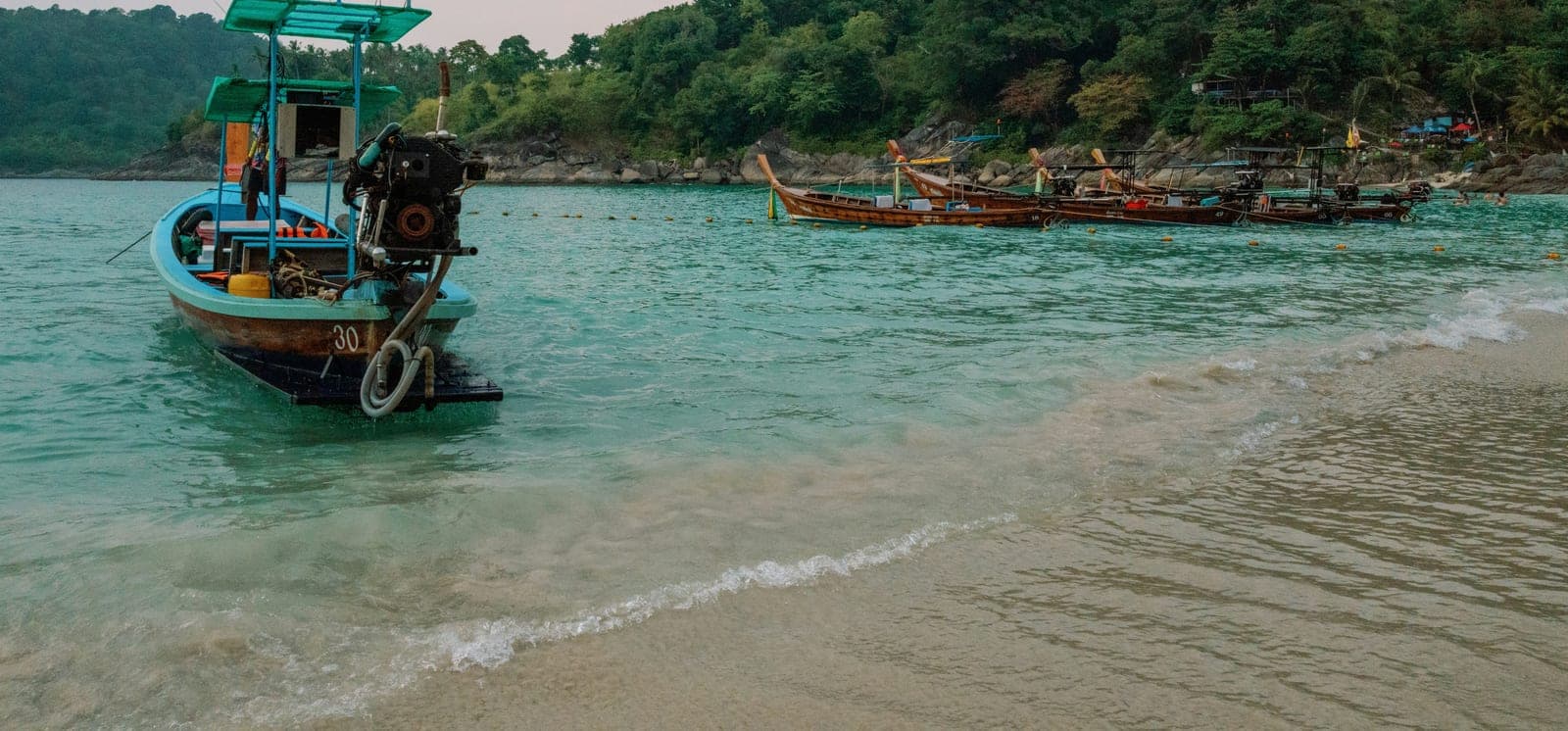
- Nai Yang: the park's headquarters, with a reef offshore and longtail boats at anchor.
- Nai Thon: a sheltered, curved bay between headlands, not for swimming in the monsoon; council lifeguards rescued swimmers there in July 2026.
- Banana Beach, the small cove between Nai Thon and Layan (not the Banana Beach on Coral Island): it now has a car park, toilets and showers in place of the old jungle path, and a reef to snorkel. Come before 10:00 in high season.
- Layan, at the park's southern end, falls under the park's alcohol ban too.
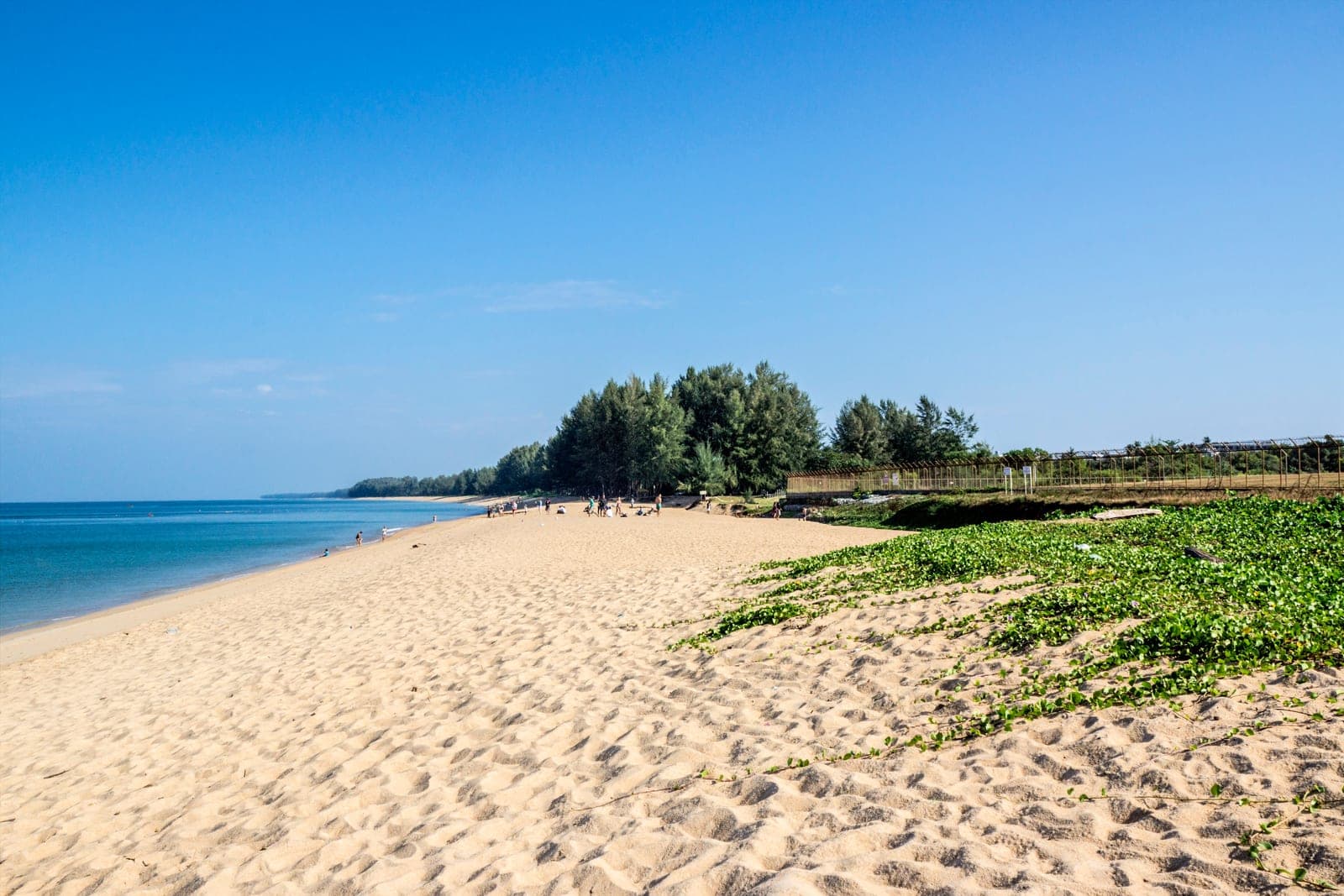

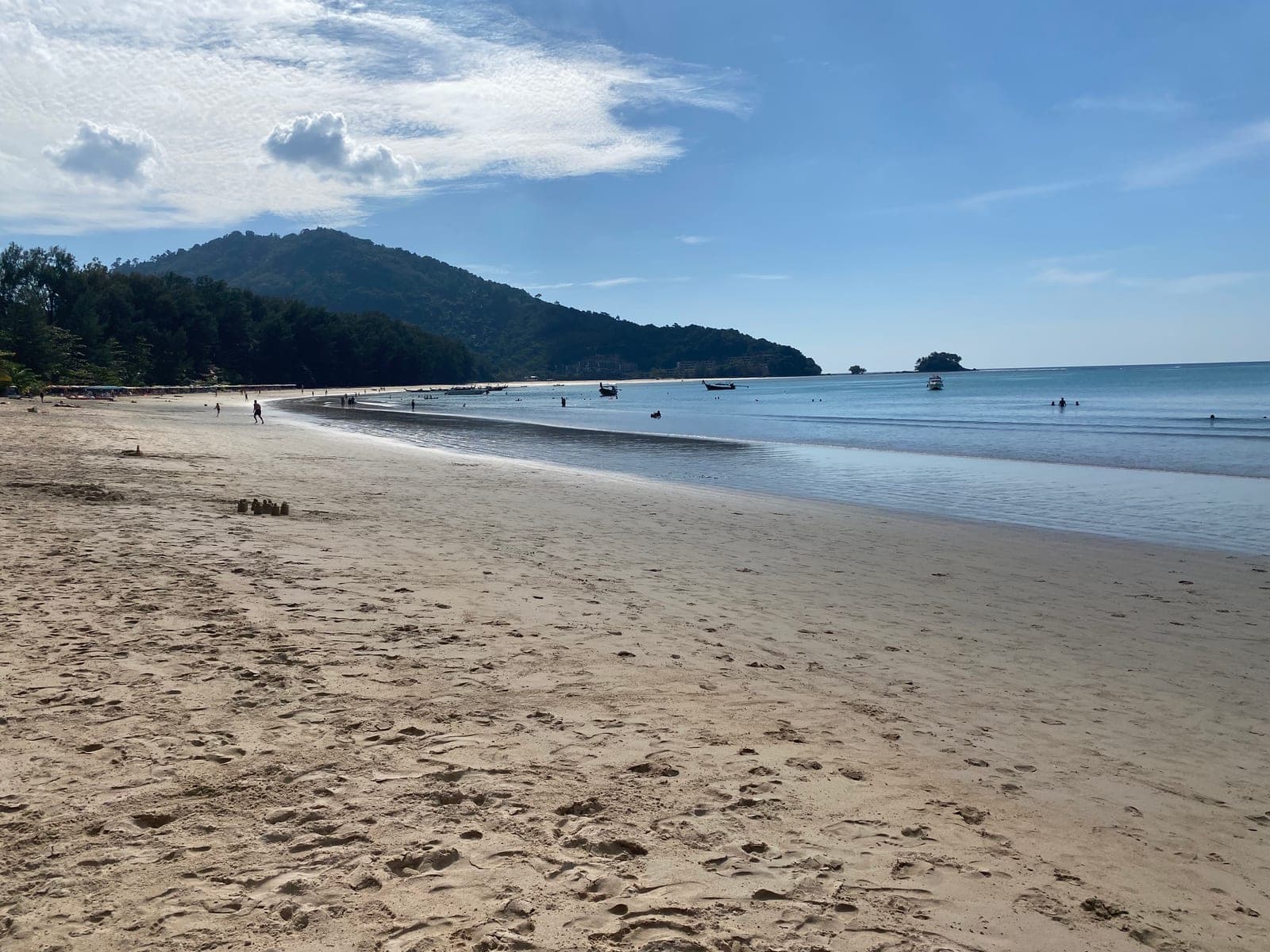

As a national park, these beaches have their own rules: no alcohol on the sand (a warning, then fines from 5,000 baht up to 100,000 baht), and no sunscreen containing oxybenzone, octinoxate, 4-methylbenzylidene camphor or butylparaben, banned in the parks since 2021. The parks department's entry fee for Sirinat, set in 2022, is 200 baht for foreign adults and 100 baht for children.
Bang Tao, Surin, Laem Sing and Kamala
- Bang Tao: one of the island's longest beaches, steep, with high waves; swimmers keep to its south end, and there's reef to the north.
- Surin: a steep, casuarina-shaded beach, not for swimming in the monsoon. Its beachfront bars and sunbed stalls were cleared in May 2025.
- Laem Sing: a protected cove where no business is allowed. A company that claims the land behind it closed the land route in April 2017, and it was still closed in March 2024, so check how to get there before you set out.
- Kamala: a quiet bay of about 2 km; lifeguards stationed there rescued a swimmer in July 2026.
Kalim, Patong and Freedom Beach
- Kalim, just north of Patong: rocky rather than sandy, with snorkelling at high tide.
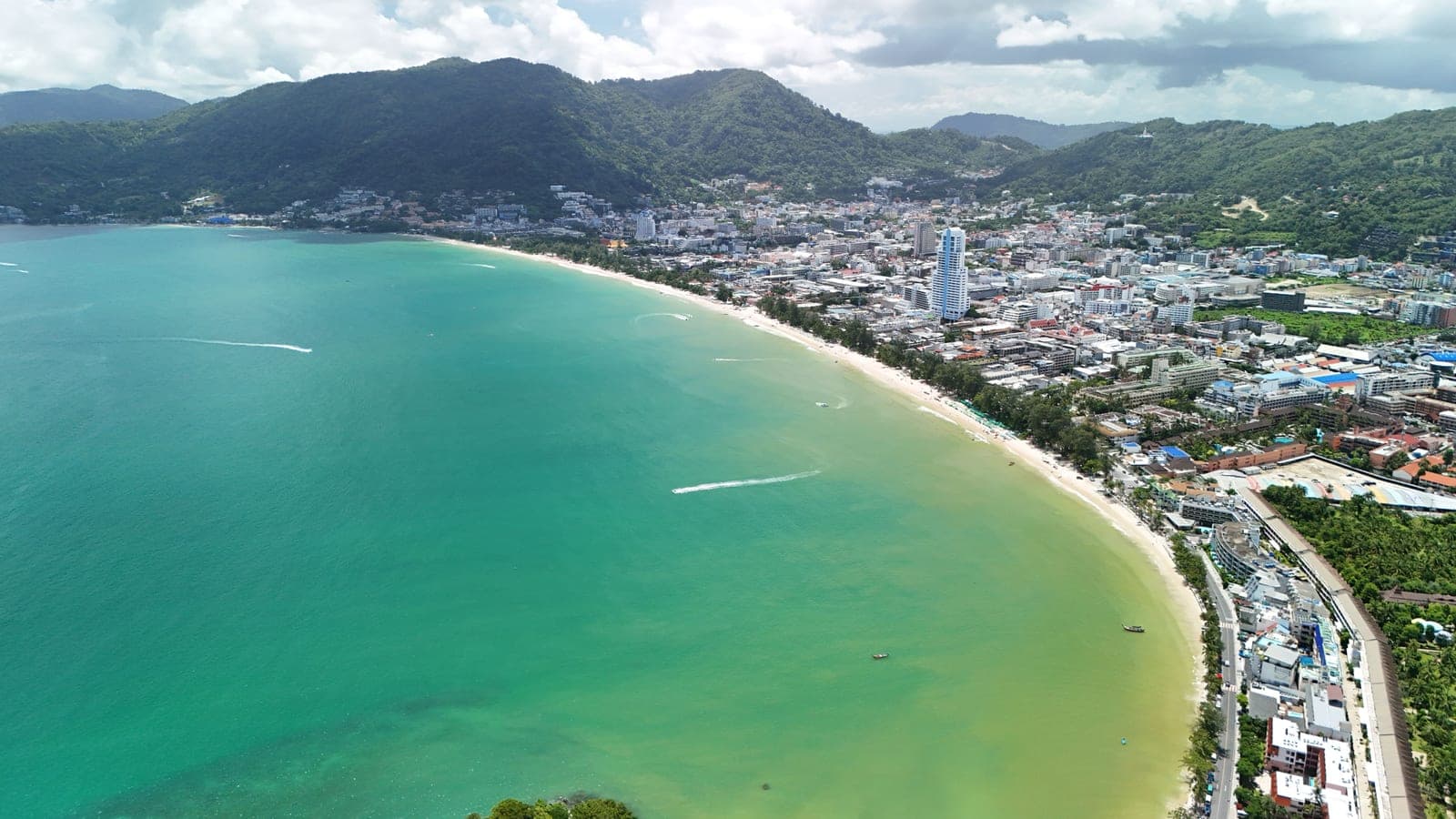
- Patong: a bay about 3 km long, the island's most visited, with its nightlife behind the sand. Sunbeds are allowed only in the zones the province has set, and swimming after dark is prohibited.
- Freedom Beach, a cove past Patong's southern headland, in a forest reserve. Officials closed it after a visitor died there in August 2026, having gone into the sea under red flags, and we couldn't confirm it has reopened; in October 2026 the forestry department posted fresh demolition notices on the buildings there. Check that it's open, and how to reach it, before you go.
Karon, Kata and Kata Noi
- Karon: a long beach of white sand, about 3 km, patrolled by just over 20 lifeguards in 2025. Its open south end has strong undertows from May to October.
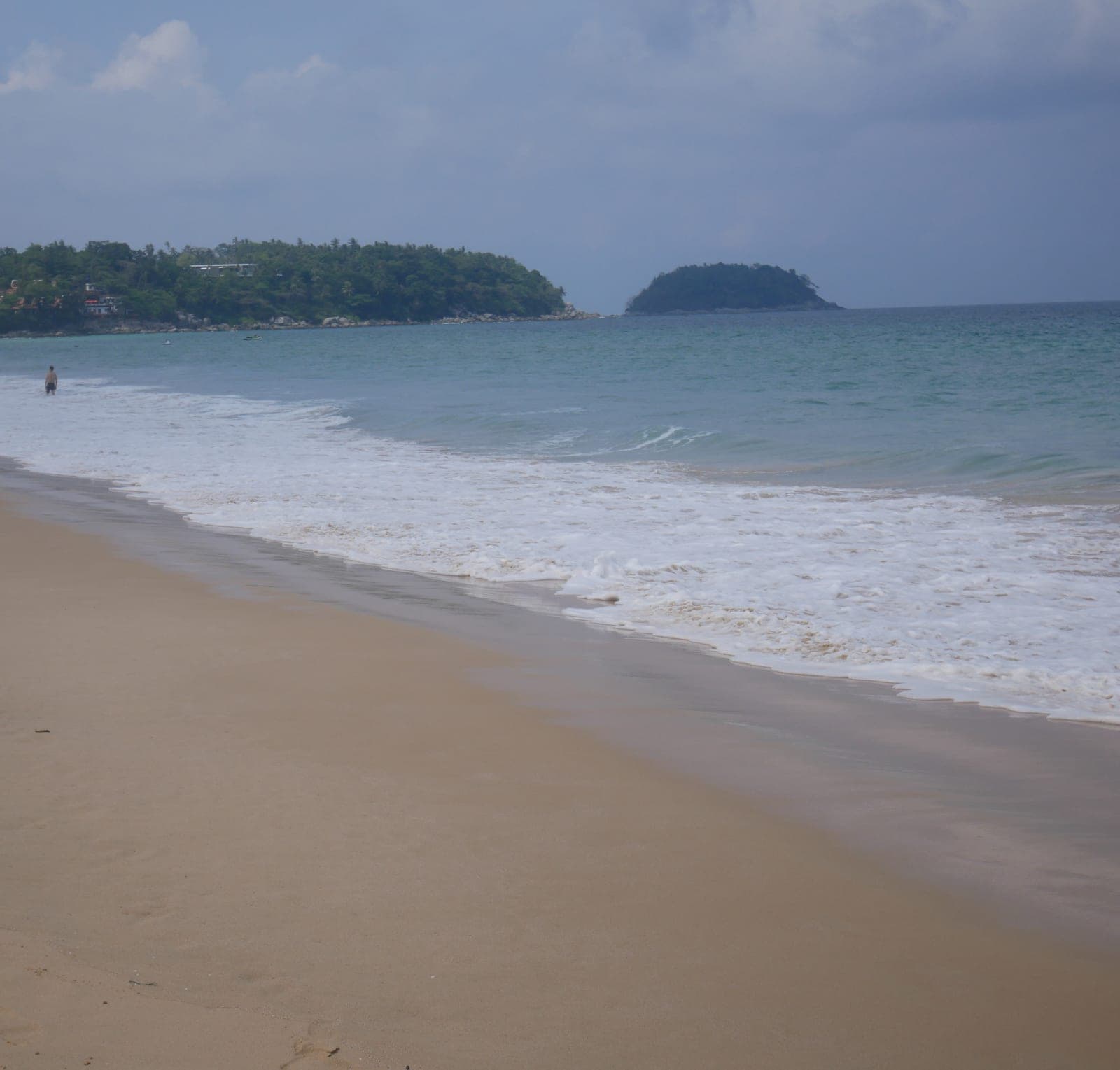
- Kata: a reef runs out towards the island of Ko Pu, and the province calls it good for swimming and diving lessons. From May to October it gets surf and red flags.
- Kata Noi: a small beach of fine white sand, the next bay south of Kata.
.jpg)
The south: Nai Harn, Ya Nui, Rawai and Chalong
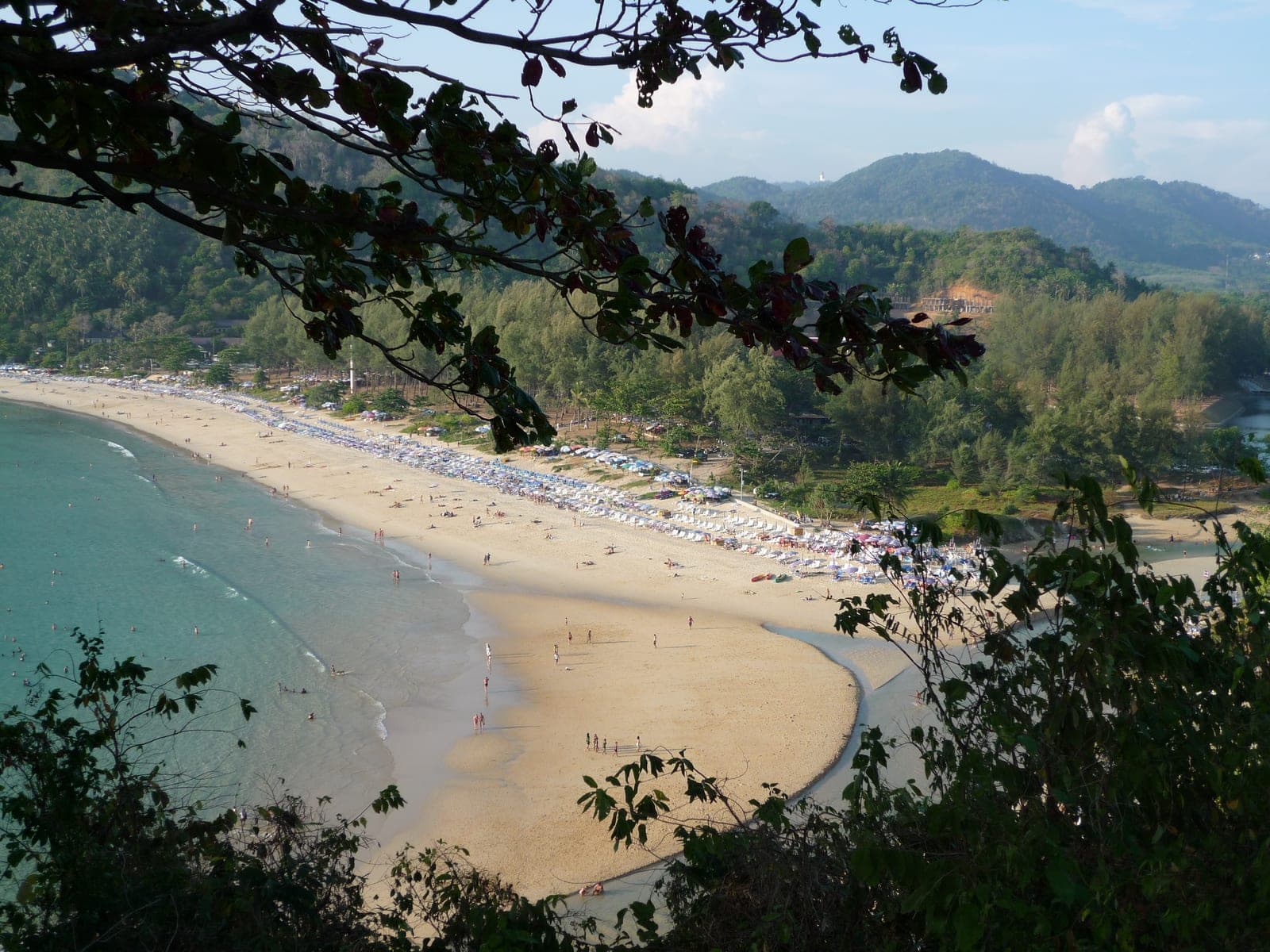
- Nai Harn: powdery sand with a lake behind it, quieter than most; swimming is advised against from May to October, and when a red flag is up, lifeguards may order you out of the water: do as they say.
- Ya Nui: a tiny, quiet cove beside the coast road between Nai Harn and Promthep Cape, below the windmill viewpoint, with the islet of Ko Man offshore.
- Rawai: a beach of longtail boats, with the seafood market by the pier; it's for boats to the islands more than for swimming.
- Chalong: a long, muddy bay on the south-east coast, with the big pier for island day trips; not for swimming.

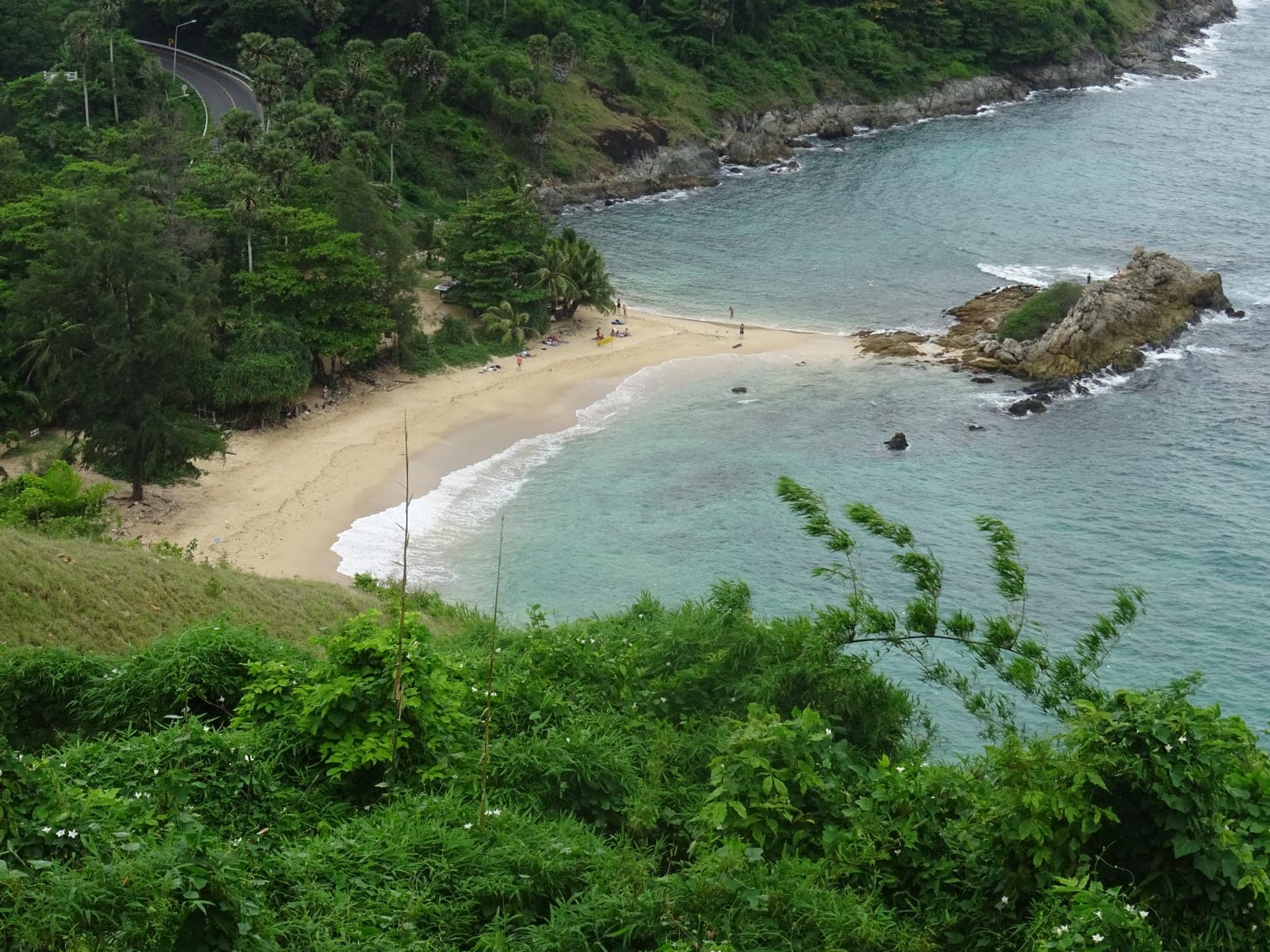

When the sea is calm, and the flags
From May to October, the south-west monsoon brings big surf and rip currents to the west coast: in 2026 the weather office warned several times of waves of 2 to 3 metres, once up to 4, off the coast from Phuket northwards. The rest of the year the sea is usually calmer, but check the flags whatever the month.
- Red flag: no swimming.
- Yellow flag: you can swim, but take care.
- Green flag: calm.
- Red and yellow: the lifeguards' zone. Swim between those flags.
Each council hires its own lifeguards, so cover varies from beach to beach, and on most beaches they work only in daylight. Patong has a night team, but only to keep people out of the water, as swimming after dark is banned there. Don't count on anyone watching the sea after sunset: paddle, don't swim, and not even that under a red flag. In June 2025, three people drowned in two days at Karon, Kata and Bang Tao, all under red flags.
The rules on the sand
- The sand is public land: nobody can own it, so walking onto a beach is free. You may pay for parking, a toilet or a sunbed, or a national park's entry fee.
- The rules allow sunbeds, umbrellas and stalls on no more than 10% of each beach (since 2015), so the rest of the sand is free for a towel, though on some beaches operators spread further.
- Drones must be registered (with the NBTC, and with the CAAT if they carry a camera), need insurance of at least 1 million baht, may fly only by day and in sight, and need approval within 9 km of the airport, which takes in the beaches nearest it. Check the national park's own rules too.
- Don't bring a vape: e-cigarettes are illegal in Thailand.
- Public nudity is an offence, with a fine of up to 5,000 baht, so no beach in Phuket is a legal nudist beach.
- Leave the parrotfish alone, and don't touch or stand on coral: both are protected.
Jellyfish, runoff and turtles
- Don't touch a jellyfish, even one washed up on the sand. If you're stung, get out of the water, don't rub the sting or rinse it with fresh water, ask a lifeguard, and call 1669 if it's serious.
- After heavy rain, don't swim where a canal or drain runs across the sand: dark runoff flows into the sea at some beaches, Karon and Kamala among them.
- Turtles still nest now and then: a green turtle laid eggs on Karon in January 2026. If you see a roped-off nest, keep back and keep your lights off.
Sunset from the beach
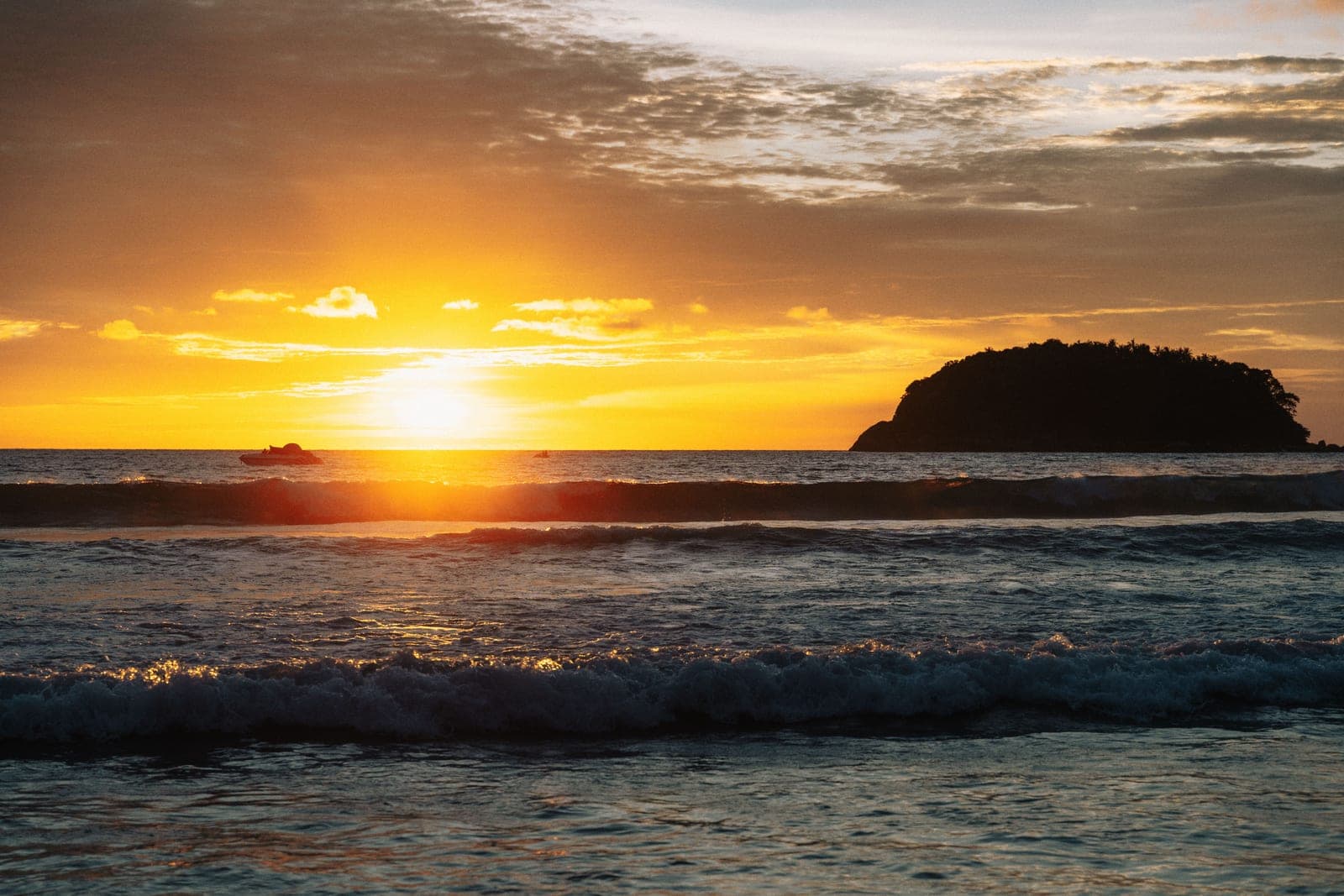
Seen from mid-beach, the sun goes down into the open sea all year at Kata Noi, Karon, Kamala, Surin, Bang Tao and Mai Khao, though from Bang Tao's ends a headland or island is in the way for much of the year. At Kata, Ko Pu hides the sunset in March and from mid-September to early October, and the northern headland from early June to early July. From the middle of Patong, the southern headland hides it from about October to mid-March (from the north end, only from December to mid-January), and at Nai Harn the northern headland hides it from late March to late September.
Which beach, which month, and today's sunset: Sunset in Phuket
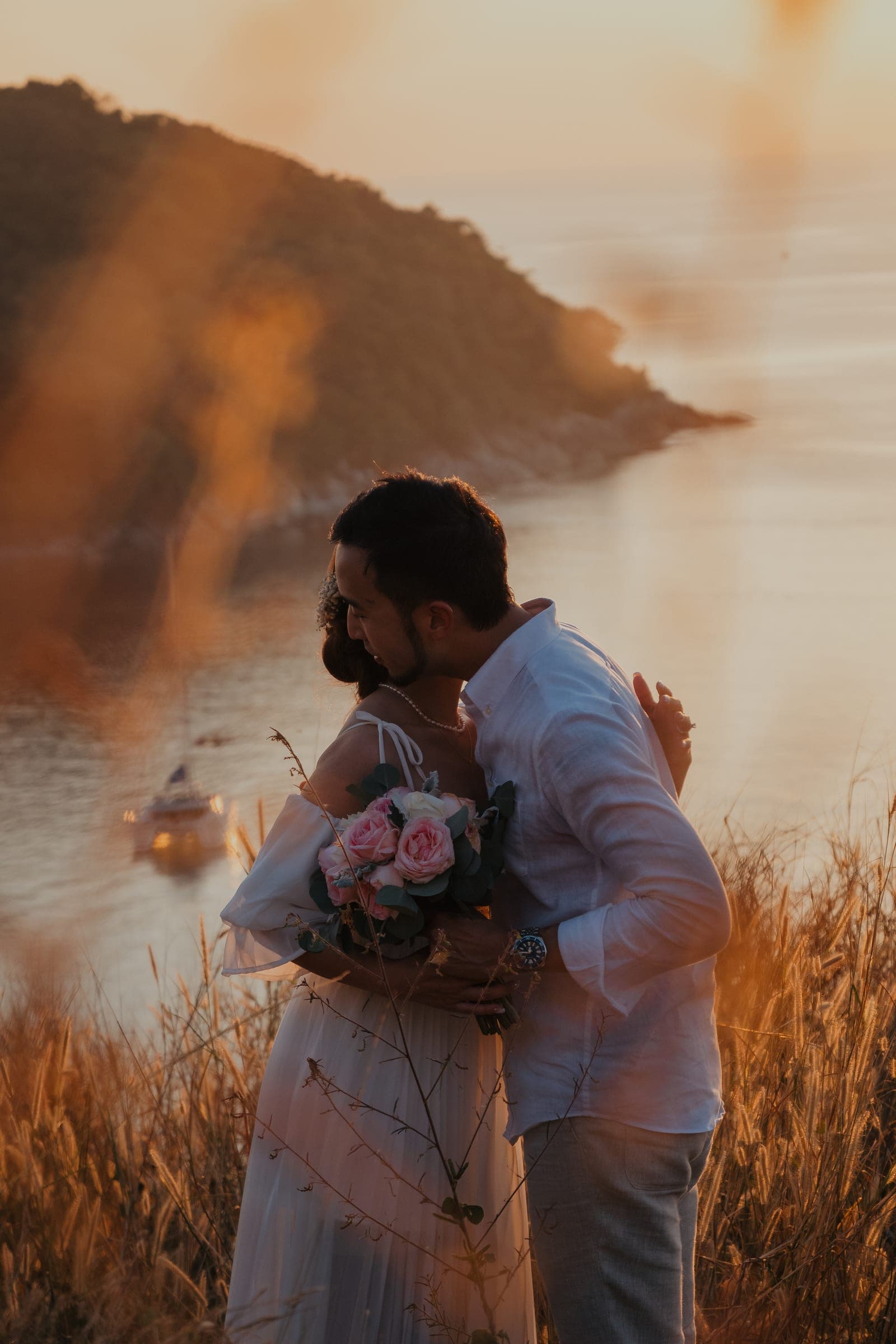
The low sun flaring over the headland near Nai Harn. 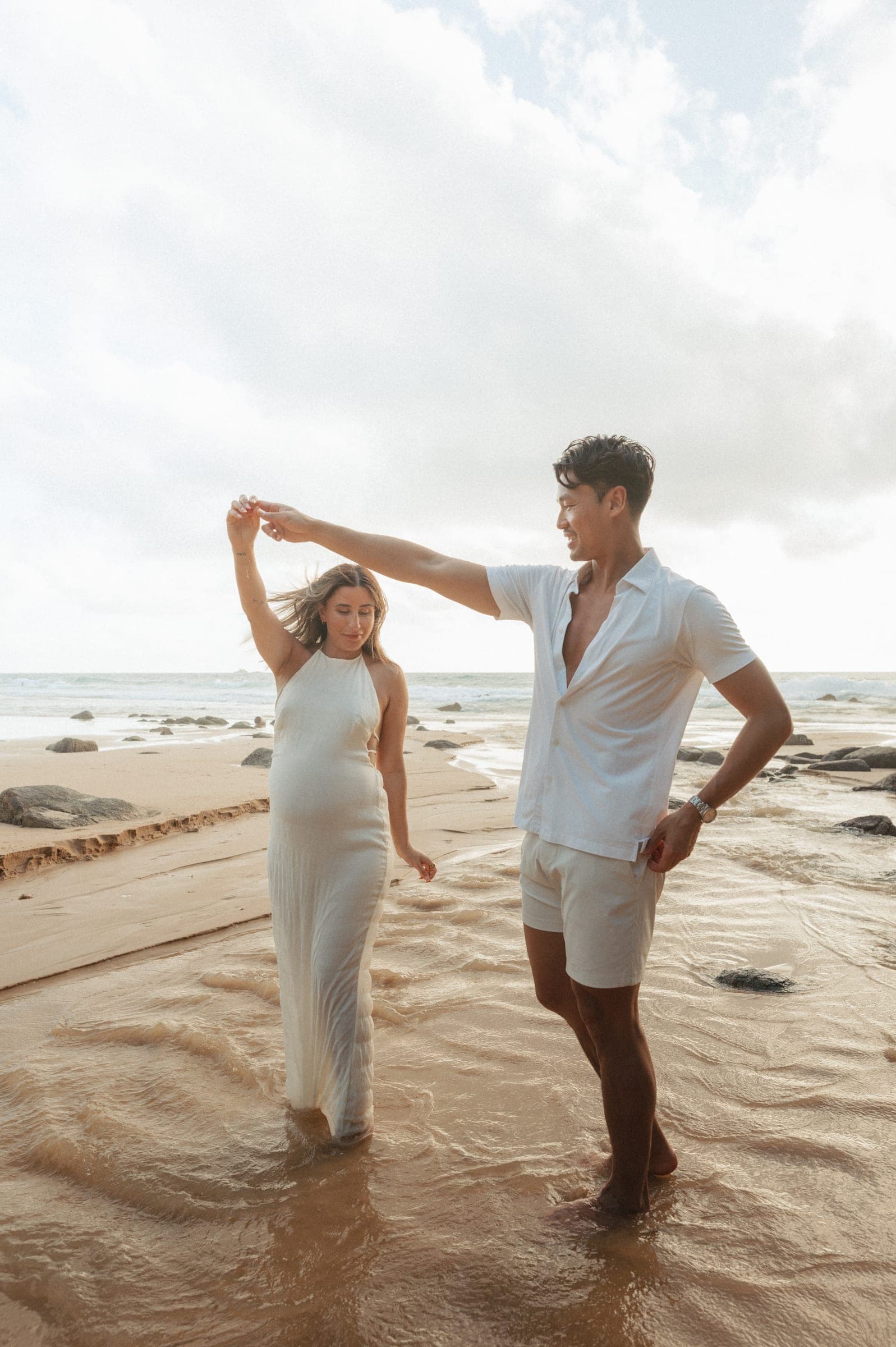
A twirl at the water's edge as a wave breaks. 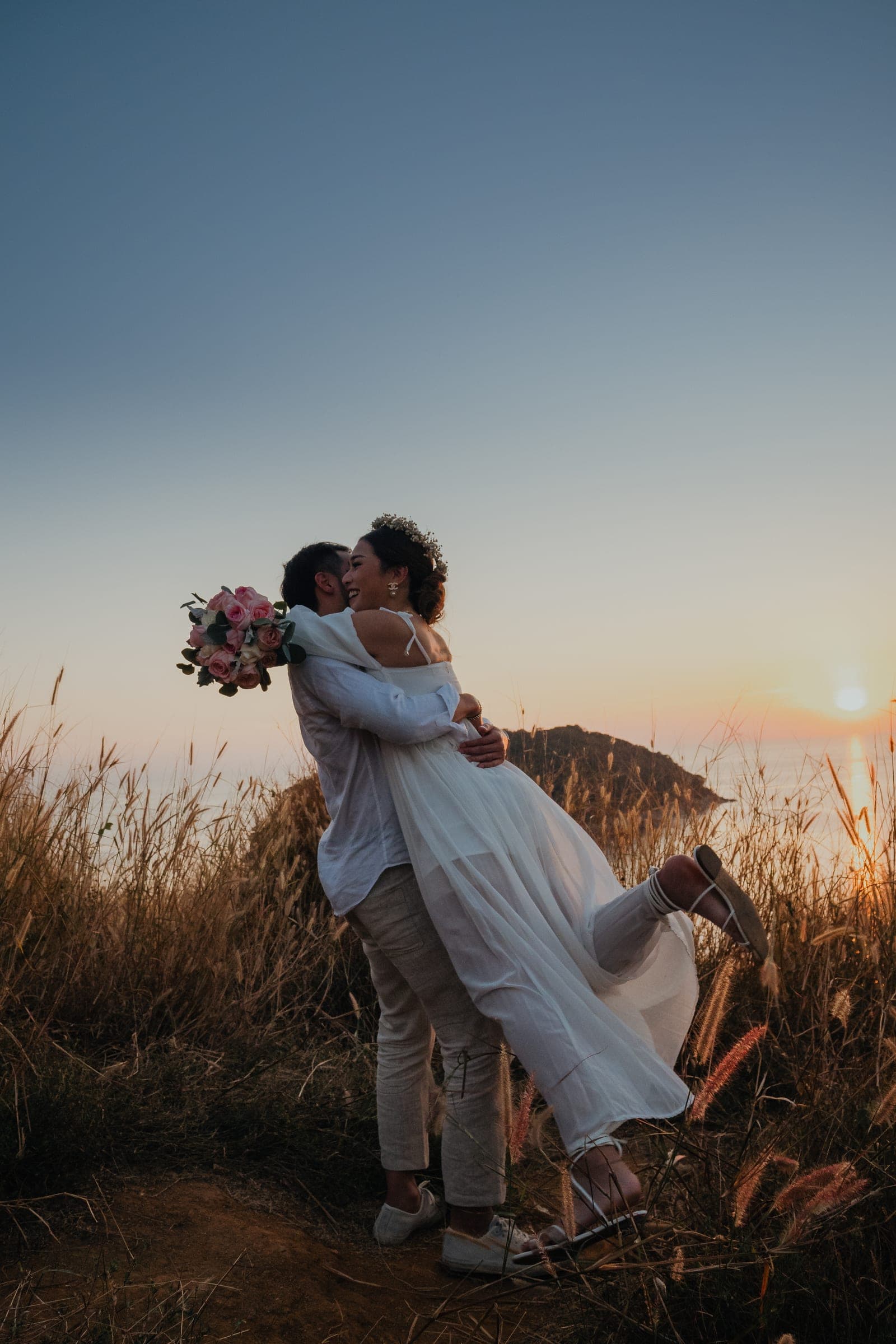
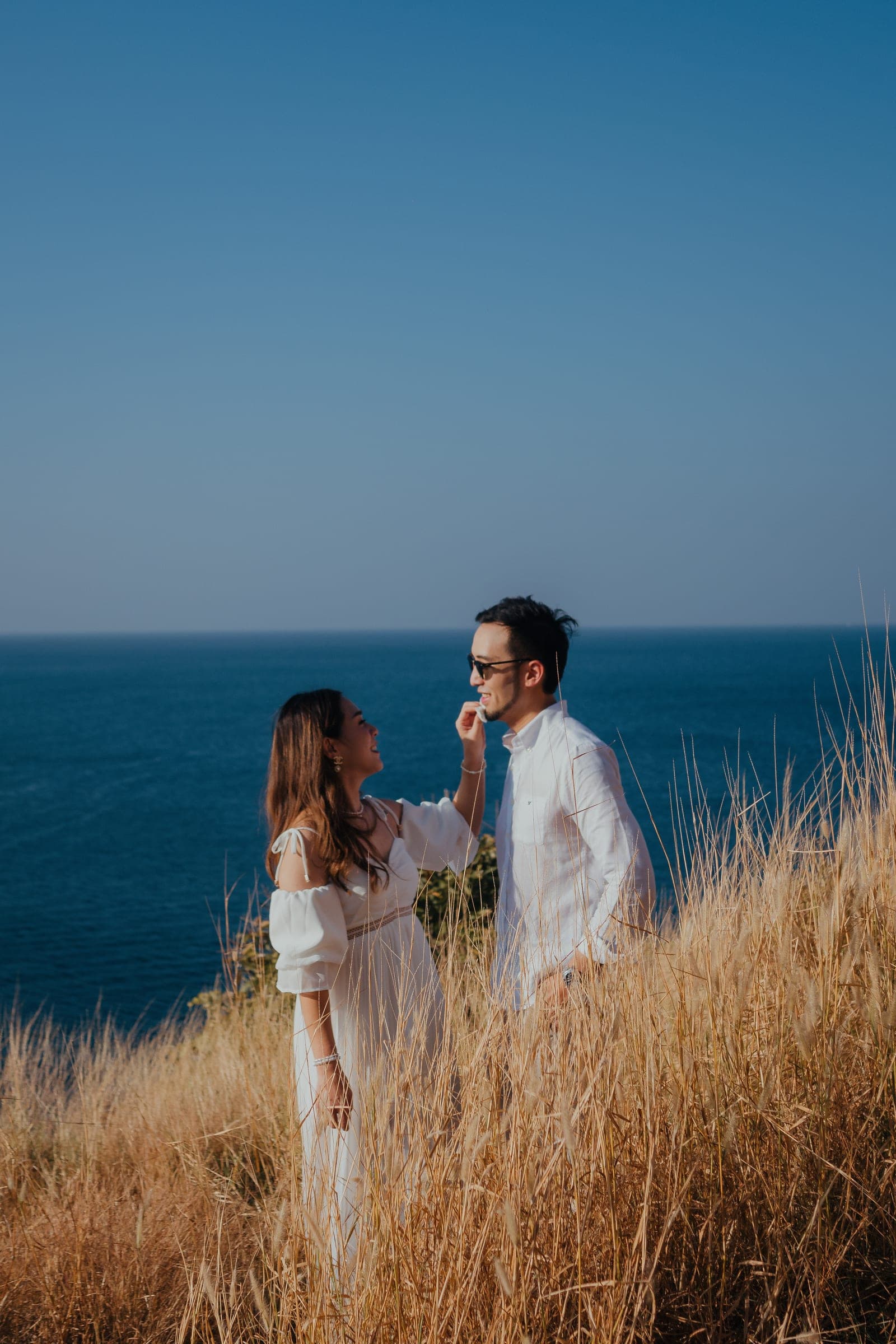
On the grassy headland as the sun goes down over the sea.
Photos of your own in Phuket's golden light: portrait photography in Phuket